
Dunmore East Woods
A Woodland Shaped by Nature and Community
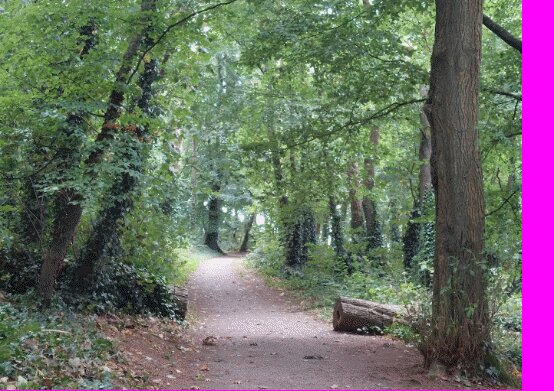
Nestled on the cliffs overlooking Dunmore East Harbour, Dunmore East Woods is one of County Waterford’s most treasured natural spaces. Together with the adjoining parkland, the Trust cares for approximately 42 acres of woodland, open spaces and walking trails, providing a unique setting where nature, heritage and community come together.
Originally planted as part of the Curraghmore Estate during the late eighteenth century, the woodland has evolved over more than two centuries into a diverse and mature landscape. Since 1924, it has been protected by the Dunmore East Woods & Park Trust, ensuring it remains a place for recreation, conservation and education.
Four Distinct Woodland Areas
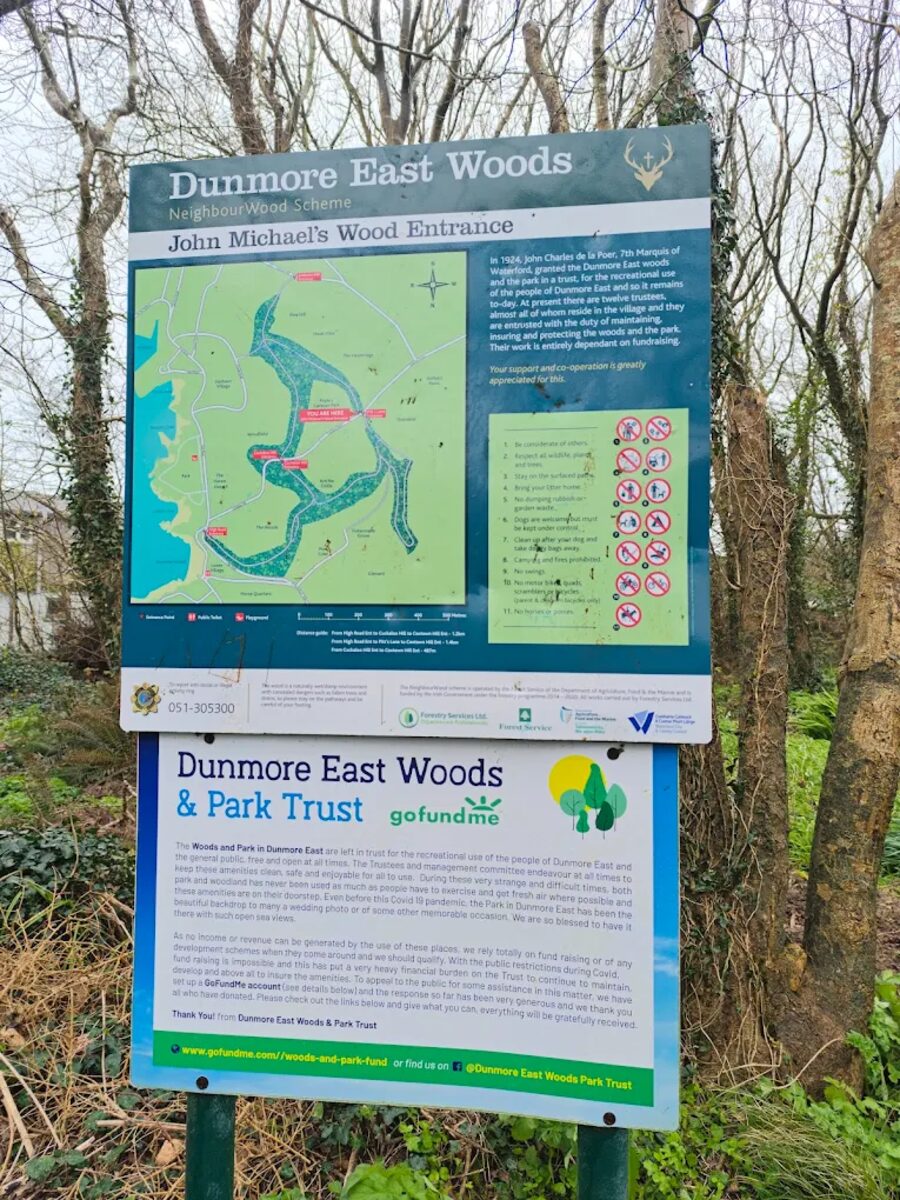
The Woods are made up of four distinct areas, each with its own character and ecological importance.
-
Main Wood
The largest section of the woodland, featuring mature trees, winding paths and a rich diversity of wildlife. It forms the heart of the visitor experience and connects many of the woodland trails.
-
Shea’s Wood
Located adjacent to the Main Wood, Shea’s Wood provides important woodland habitat and contributes to the continuity of the woodland ecosystem.
-
Lacey’s Wood
A smaller section of the woodland, running between Killea and Ballymabin, with mature trees and valuable habitat for birds, mammals and woodland flora. A new accessible trail is planned here.
-
Foillakippen Wood (“Madman’s Wood”)
Situated in Killea, Foillakippen Wood contains some of the woodland’s most natural habitats and has benefited from significant conservation and restoration work in recent years.
[Map of the four woods to follow]
A Rich Coastal Woodland
Although best known for its spectacular scenery, the woodland is equally important for its biodiversity.
A 2015 Biodiversity Management Plan undertaken by the Trust identified a rich mix of native and ornamental tree species, extensive woodland flora, valuable deadwood habitat and a wide variety of birds, mammals and insects that depend upon the woodland throughout the year.
Visitors can experience something different in every season, from carpets of spring bluebells and birdsong to autumn colour and winter woodland walks.
A Place for Everyone
For over a century, the Woods and Park have provided a place where people can:
- Walk and enjoy nature.
- Observe local wildlife.
- Learn about woodland habitats.
- Exercise and relax.
- Experience the changing seasons.
- Discover the natural and cultural heritage of Dunmore East.
Whether you’re taking a short stroll, enjoying a family walk or simply finding a quiet place to reflect, the Woods remain one of the village’s most valued community spaces.
Flora & Fauna
Dunmore East Woods is home to a remarkable variety of wildlife, from towering mature trees and colourful woodland flowers to birds, mammals, insects and fungi. The woodland’s rich mix of habitats provides food, shelter and breeding areas for many species throughout the year.
Every season offers something different to discover, making each visit a unique experience.
Trees of the Woodland
The woodland contains a diverse mixture of native and ornamental tree species, reflecting both its natural heritage and its origins as part of the historic Curraghmore Estate. Native species include:
- Oak
- Ash
- Hazel
- Holly
- Yew
- Sycamore
- Beech
Alongside these are a number of non-native species that have become established over many decades. The woodland is a rich mixture of conifers and deciduous trees, and among them you will also find Wild Cherry, Silver Birch, Common Lime, Scots Pine and Rowan, many planted as part of the NeighbourWood Scheme.
Many of the mature trees now provide valuable habitat for birds, bats, insects and woodland plants.
Woodland Flowers & Plants
During spring, the woodland floor comes alive with colour. Among the plants recorded in the Biodiversity Management Plan are:
- Bluebells
- Primroses
- Lesser Celandine
- Wood Anemone
- Dog Violet
- Herb Robert
- Foxglove
- Ferns
- Mosses
- Ivy
These native woodland plants help support pollinating insects and contribute to the rich biodiversity of the woods.
[Photographs of woodland flowers to follow]
Birds
The Woods provide important nesting and feeding habitat for a wide range of woodland birds. Species recorded include:
- Robin
- Blackbird
- Song Thrush
- Wren
- Blue Tit
- Great Tit
- Coal Tit
- Chaffinch
- Jay
- Woodpigeon
- Sparrowhawk
- Buzzard
If you’re lucky, you may also hear the distinctive drumming of woodpeckers or catch sight of birds of prey soaring above the woodland canopy.
Mammals
Although often hidden from view, many mammals call the Woods home. Evidence of these species has been recorded throughout the woodland:
- Badger
- Fox
- Rabbit
- Wood Mouse
- Hedgehog
- Bats
The mature woodland, hedgerows and undisturbed areas provide valuable shelter and feeding opportunities for these animals.
Insects, Fungi & Deadwood
A healthy woodland depends upon much more than trees.
Standing dead trees and fallen timber provide essential habitat for insects, fungi, mosses and lichens, all of which play an important role in recycling nutrients and supporting the woodland ecosystem.
For this reason, not all deadwood is removed. Where it is safe to do so, it is left in place to benefit wildlife. This is an important principle of modern woodland conservation.
Looking After Biodiversity
The Trust actively manages the woodland to encourage biodiversity while preserving its natural character. This includes:
- Encouraging natural regeneration.
- Planting appropriate native species.
- Managing invasive plants.
- Protecting habitats for birds and mammals.
- Retaining suitable deadwood for wildlife.
- Monitoring the health of the woodland.
These principles form part of the long-term Biodiversity Management Plan that guides the care of the Woods today.
Wildlife Through the Seasons
Every visit offers something new.
-
Spring
- Bluebells
- Primroses
- Nesting birds
- Fresh woodland growth
-
Summer
- Butterflies
- Woodland flowers
- Birds feeding young
-
Autumn
- Colourful leaves
- Mushrooms and fungi
- Berries
- Wildlife preparing for winter
-
Winter
- Woodland silhouettes
- Holly and ivy
- Bird activity
- Peaceful woodland walks
Looking After the Woods
Caring for a mature woodland is an ongoing responsibility.
The Trust follows a long-term approach to woodland management that balances conservation with public access. Guided by professional ecological advice, the focus is on protecting biodiversity, encouraging natural regeneration, managing invasive species and ensuring the woodland remains safe and accessible while retaining its natural character.
More than one hundred years after the Trust was established, that original commitment continues: to care for this special place so it can be enjoyed by future generations.
Help Us Record Wildlife
Have you spotted an interesting bird, wildflower or animal while visiting the Woods? We’d love to hear from you. Community wildlife records help us build a better understanding of the biodiversity of Dunmore East Woods and support our ongoing conservation work.
Tell us what you have seen in the Woods.
RECORD A SIGHTING